
RGB versus CMYK
Learn the difference between RGB and CMYK colour spaces and why CMYK is essential for accurate, high-quality label printing results.
Team • 2026-09-28
What is the difference between the two colour sets?
This week we discuss colours or colour spaces. They are elementary for the creation of print data. The question of the week is: “What exactly is the difference between RGB and CMYK?
Let us first take a look at the RGB colour space: This additive colour space consists of the three primary colours red, green and blue. The human eye perceives colours by mixing these three primary colours. This is why RGB colours are colloquially referred to as screen colours. They are mainly used for displaying colour images on monitors or television sets.
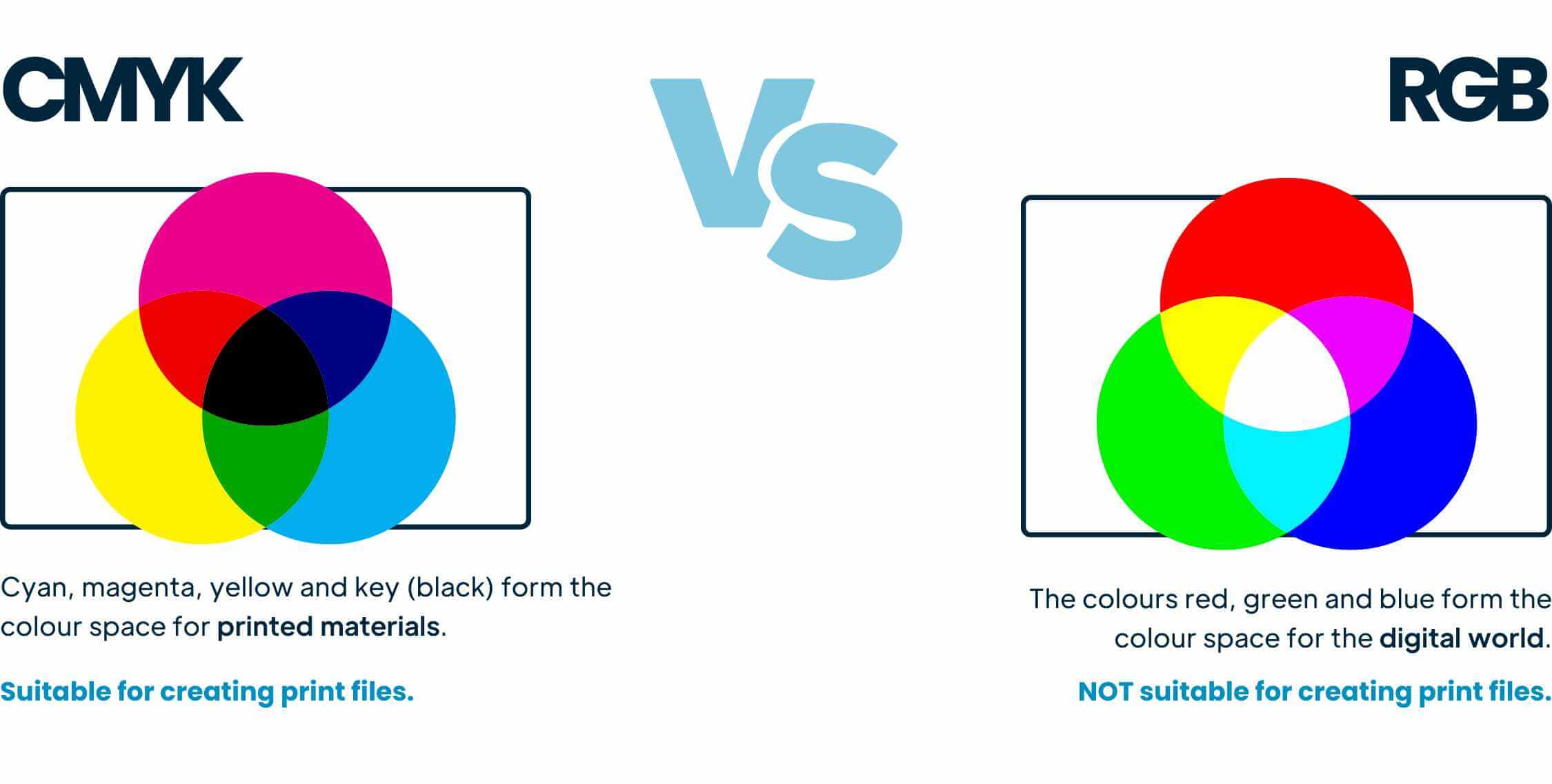
In contrast, the CMYK colour model is called a subtractive colour model. This model consists of the colour components cyan, magenta and yellow, supplemented by the black component Key. Since the three basic colours C-M-Y cannot represent deep black, the colour model was supplemented by the printing colour black (key). All colours can thus be represented by mixing the different colour components. The CMYK model forms the basis for modern four-colour printing.
Colours that are created in RGB cannot be printed. They are automatically converted into CMYK before the printing process. It can happen that the colour result is distorted. To avoid this, we ask you to create your artwork or colours for printing in CMYK. Questions? You can reach us by telephone on +44 (0) 203 588 1080 or by email: info@label.co.uk.

Stay up to date with the latest trends
with our newsletter